We may earn a commission when you buy through links on this site, at no extra cost to you. As an Amazon Associate I earn from qualifying purchases.
Comparison
Best Coolers of 2026: 8 Ice Chests and Electric Coolers
We compared the published specs of 8 coolers for 2026, from the YETI Tundra 45 to the Dometic CFX3 45, and ranked them by who each one suits.
B By the Best Cooler editorial team ·Published
At a glance
Most people should start with the YETI Tundra 45, a rugged rotomolded chest that is bear resistant when padlocked. The Dometic CFX3 45 suits multi-day trips without ice, the RTIC 52 QT Ultra-Light offers the most space for the weight, and the YETI Roadie 48 rolls on wheels.
Choosing a cooler comes down to a few trade-offs: how long it has to stay cold, how far you carry it and whether you want to deal with ice at all. We do not handle the products we cover. We compared the specs and measurements published by manufacturers and outside outlets, read the sources listed at the end and ranked eight models by who each one suits. Where a figure comes from a maker, we say so, and where a source does not give a number, we leave it out instead of guessing.
The lineup mixes five passive ice chests with three electric coolers that use a compressor, the same technology as a household refrigerator. They solve different problems, so the ranking reflects how many people each one fits, not a single score.
How We Chose
Five questions sort the field quickly.
Ice chest or compressor cooler. An ice chest needs no power and lasts for days on ice. A compressor cooler holds a set temperature, down to freezer level, as long as it has power, and it leaves no meltwater.
Usable space. The quart number in a name is nominal because thick walls take up room. OutdoorGearLab measured about 35 quarts of usable space in the YETI Tundra 45 and about 49 in the RTIC 52 QT Ultra-Light.
Weight and wheels. A loaded cooler is a two-person lift. Empty weights here run from about 16 lbs to about 50 lbs, and only two models have wheels.
Ice retention. Maker claims of many days assume ideal conditions. We use outside measurements where we found them and label maker claims as claims.
Toughness and rules. Bear country, boats and truck beds reward a rotomolded shell, locks and tie-down points. The 40°F line matters for food: it is the usual cutoff for keeping perishables safe.
Comparison Table
#
Model
Type
Capacity
Empty weight
Power
Best for
1
YETI Tundra 45
Rotomolded ice chest
About 35 qt usable (per OutdoorGearLab)
29.6 lbs
None
Frequent use, bear country
2
Dometic CFX3 45
Compressor fridge/freezer
About 49 qt (46 L)
42.8 lbs
12/24V DC or 100-240V AC
Multi-day road trips
3
RTIC 52 QT Ultra-Light
Injection-molded ice chest
About 49 qt usable (per OutdoorGearLab)
21.6 lbs
None
Most space for the weight
4
YETI Roadie 48
Wheeled rotomolded ice chest
About 45 qt usable (per OutdoorGearLab)
26.6 lbs
None
Beach, tailgate, long walks
5
Anker SOLIX EverFrost 2 40L
Battery compressor cooler
42 qt (40 L), per Anker
About 50.7 lbs
Removable 288Wh battery, AC, 12V, USB-C, solar
Cold with no car or outlet
6
Pelican Elite 50
Rotomolded ice chest
About 50 qt (47 L)
About 26 lbs
None
Boats, fishing, long-term use
7
BougeRV CR28 30 Quart
Compact compressor fridge/freezer
30 qt
About 22.8 lbs
12/24V DC or 110/240V AC
Budget car-trip fridge
8
Igloo BMX 52
Blow-molded ice chest
52 qt
About 16.3 lbs
None
Budget weekend cooler
Weights and sizes come from OutdoorGearLab (1, 3, 4), Dometic (2), ESS News (5), Australian Geographic (6), The Gadgeteer (7) and The Cooler Zone (8). Capacity figures for the two YETI chests and the RTIC are OutdoorGearLab’s usable-space measurements, not the nominal numbers in the names. Listings for the Pelican, BougeRV and Igloo models disagree on some figures, so confirm them on the page you buy from.
The Tundra 45 is what most people picture when they think of a hard cooler: a one-piece rotomolded shell, thick foam walls, rubber T-latches and tie-down slots. OutdoorGearLab measured it at 29.6 lbs empty with about 35 quarts of usable space, and it comes with a dry goods basket. It holds below 40°F for about 98 hours in OutdoorGearLab’s measurements, roughly 4.1 food-safe days, which that outlet called about average for its size.
It ranks first because it is the safest all-round choice for people who use a cooler hard and often. OutdoorGearLab lists it as IGBC certified bear resistant when locked with padlocks, which are sold separately, and the hardware is easy to use with wet hands. The costs are weight, no wheels and a lid gasket that is not airtight, according to OutdoorGearLab. See the full breakdown in our YETI Tundra 45 profile.
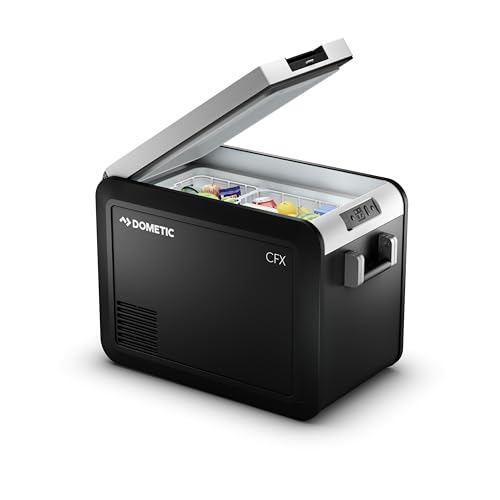
According to Dometic, the CFX3 45 holds 46 liters (about 49 quarts), weighs about 42.8 lbs (19.4 kg) empty and cools to about -7.6°F. It runs from 12/24V DC or 100-240V AC and has a three-stage battery protection system. Dometic rates it at 1.03 Ah per hour at 12V under its stated conditions. It has no battery of its own, so it runs from a vehicle, a campground outlet or a portable power station.
It takes second place because it solves a different problem than an ice chest: it keeps food at a steady temperature for as long as it has power. That suits overlanding, van life and long drives. For weekends with a cooler and a bag of ice, it is more machine than you need. Details are in our Dometic CFX3 45 profile.
3. RTIC 52 QT Ultra-Light — The Best Value for Space and Weight
The Ultra-Light is injection-molded rather than rotomolded. OutdoorGearLab measured 21.6 lbs empty and about 49 quarts of usable space, with three inches of closed-cell foam. It reported about 145 hours at food-safe temperatures, close to six days, without pre-chilling. That beats the Tundra 45 on space, weight and measured retention.
The trade-off is toughness. OutdoorGearLab described the latches and hinges as flimsy and noted a slight leak around the lid, and no IGBC certification is listed for this model. Families, anglers and tailgaters who are gentle with gear get a lot of cooler for the weight. Our RTIC 52 QT Ultra-Light profile has the details.
OutdoorGearLab scored the Roadie 48 an 87 overall and ranked it first of 23 coolers, with the longest measured ice retention: 6.8 food-safe days. It measured 26.6 lbs empty with about 45 quarts of usable space and a tall interior that stands wine and 2-liter bottles upright. It has two wheels, a handle that locks only when fully extended and a dry goods basket.
It sits fourth only because many buyers will not need wheels. Annoyances include a single drain with an unleashed plug and a lock that must be installed. If your route to the picnic spot involves a parking lot or a boardwalk, it moves up the list. Read our YETI Roadie 48 profile.
5. Anker SOLIX EverFrost 2 40L — Cold Without a Car or Outlet
Anker lists 40 liters (42 quarts), a range of -4°F to 68°F and one removable 288Wh LiFePO4 battery. It charges from an AC adapter, a 12V socket, USB-C or a 100W solar panel. Anker claims up to 52 hours on one battery in Eco mode with an empty cooler. ESS News reported that outside runtime checks it was told about came in around 23 hours as a fridge and 16 hours as a freezer, so treat 52 hours as a ceiling.
At about 50.7 lbs empty, per ESS News, it is heavy, which is why it ranks fifth: many buyers will be happier with a simpler cooler. It earns its place for beach days, tailgates and campsites where nobody can plug in. See the Anker SOLIX EverFrost 2 40L profile.
6. Pelican Elite 50 — Built to Last, Heavy to Carry
The figures come from Australian Geographic: about 50 quarts (47 liters), roughly 26 lbs empty, about 2 inches of polyurethane, a freezer-grade gasket, stainless hardware, a tethered drain plug and a lifetime guarantee. Pelican claims up to 10 days of ice, which the writer did not verify, though ice lasted through a hot three-day trip.
It ranks sixth because the premium tier is crowded and its size, about 30 inches long, makes it a drive-to-the-water cooler. Anglers, boaters and truck owners who keep gear for decades will like it most. Our sources list no bear certification. See the Pelican Elite 50 profile.
The Gadgeteer lists the maker’s specs for the BougeRV 30 Quart: 30 quarts (28 liters), 22.8 lbs, 12/24V DC or 110/240V AC, a -7°F to 50°F range and 45 to 60 watts depending on mode. Adjustable undervoltage protection shuts it off when voltage drops. The writer noted that the unit ran 1 to 3 degrees below its setpoint, and that the plastic near the power plug flexed. That write-up does not use the CR28 name, so match the model name on the listing.
It is seventh because it is small and has no battery. For a solo traveler, a couple on a long drive or a driver who wants cold lunch in the cab, it is the least expensive way here to real refrigeration. Read the BougeRV CR28 30 Quart profile.
The Cooler Zone lists 16.34 lbs empty, one-piece walls about 2 inches thick, stainless hinge screws, rubber T-latches and a molded fish ruler. Its rough outdoor ice check in Texas as the weather was cooling ran 72 to 105 hours, three to a little over four days.
It is eighth because the walls are thinner than those of premium chests, and our sources list no bear certification. As a first hard cooler for weekends, tailgates and a small boat, it is light and tough enough. See the Igloo BMX 52 profile.
Which Cooler for Which Use
Everyday camping and fishing: the YETI Tundra 45 (1) for toughness, or the RTIC 52 QT Ultra-Light (3) if weight and space matter more.
Multi-day trips without ice: the Dometic CFX3 45 (2), if you have vehicle or power-station power.
Beach and tailgate: the YETI Roadie 48 (4) for wheels, or the Anker SOLIX EverFrost 2 40L (5) when you also need cold with no outlet.
Boats and long-term ownership: the Pelican Elite 50 (6).
Car trips on a budget: the BougeRV CR28 30 Quart (7) for a fridge, or the Igloo BMX 52 (8) for a no-power chest.
Which Cooler for Which Budget
We do not list prices, because they change daily and you can see the current one on Amazon. Broadly, the Igloo BMX 52 (8) and the BougeRV CR28 (7) are the budget picks, the RTIC (3) is the value pick, and the YETI Tundra 45 (1), Dometic CFX3 45 (2), YETI Roadie 48 (4), Anker SOLIX EverFrost 2 40L (5) and Pelican Elite 50 (6) are premium. If you want 12V cooling in a car, our guide to the best electric cooler for a car goes deeper.
How to Get the Most From Any Cooler
Packing matters about as much as the model.
Pre-chill. Fill the empty cooler with a sacrificial bag of ice, or run a powered unit while it is plugged in at home, the night before.
Use more ice than food. About 2 parts ice to 1 part contents is a common rule, and block ice or frozen jugs last longer than cubes.
Keep it in the shade and covered, including in a hot car.
Open it less. Pack drinks in a separate small cooler.
Watch 40°F. OutdoorGearLab’s food-safe figures use 40°F as the cutoff, so plan around those days for meat, dairy and leftovers.
Conclusion
The YETI Tundra 45 (1) is our pick for most people, the Dometic CFX3 45 (2) is the one to buy if you want to skip ice on long trips, and the RTIC 52 QT Ultra-Light (3) is the smart value. The YETI Roadie 48 (4) wins on wheels, the Anker SOLIX EverFrost 2 40L (5) wins on battery freedom, the Pelican Elite 50 (6) on longevity, the BougeRV CR28 30 Quart (7) on budget refrigeration and the Igloo BMX 52 (8) on low weight and cost. Figures that differ between listings are flagged above, so confirm weight and size on the page you buy from.
We rank the YETI Tundra 45 first because it is a tough rotomolded chest that is IGBC certified when padlocked, according to OutdoorGearLab. If weight and capacity matter more than a rugged feel, the RTIC 52 QT Ultra-Light holds more and weighs less.
Is a powered cooler worth it compared with an ice chest?
It depends on the trip. A compressor cooler such as the Dometic CFX3 45 holds a set temperature without ice or meltwater, but it needs a 12V socket, an outlet or a power station. For weekend trips, a well-packed ice chest is simpler and needs no wiring.
How long does ice really last in a cooler?
Maker claims run to many days, but they assume ideal conditions. OutdoorGearLab measured about 4.1 food-safe days for the Tundra 45, about six for the RTIC and 6.8 for the Roadie 48. Pre-chilling, a high ice ratio, shade and fewer openings all help.
Why is the usable space smaller than the quart number?
Thick insulated walls take up room, so the number in a model name is nominal. OutdoorGearLab measured about 35 quarts of usable space in the Tundra 45 and about 49 quarts in the RTIC 52 QT Ultra-Light, so compare measured volume when you can.
Which cooler is best for the beach?
A wheeled model makes the walk easier, and the YETI Roadie 48 has two wheels and a retractable handle. The Anker SOLIX EverFrost 2 40L also has wheels and a battery, though it weighs about 50 lbs empty.
Can a cooler be bear resistant?
Some are certified by the Interagency Grizzly Bear Committee, usually only when locked with padlocks. OutdoorGearLab lists the Tundra 45 as certified. Our sources list no certification for the other models, so check the IGBC list and local rules.